The Collection
Maya Lin
Ellen S. Clark Hope Plaza
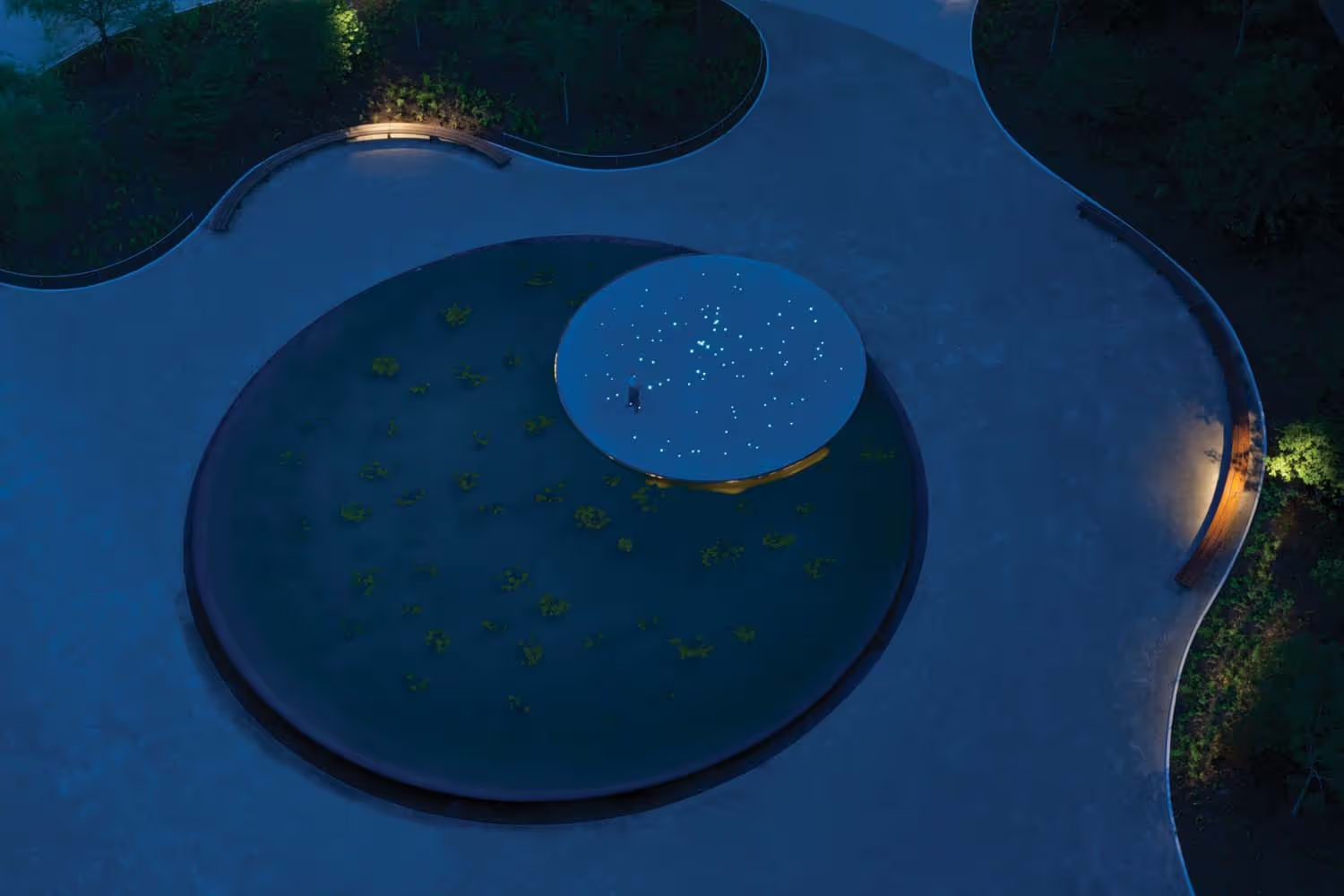
Artist, architect and memorialist Maya Lin has designed a range of works from public and private buildings, to memorials and landscapes. She is best known for her memorials that have a historic character—the Vietnam Veterans Memorial in Washington D.C. and the Civil Rights Memorial in Montgomery, Alabama. Much of Lin’s work is concerned with the environment, as she is both inspired by the natural architecture found in landscapes and profoundly concerned about the human impact on climate. She creates work that focuses on the relationship between humans and their environment, stating: “I am very drawn to landscape, and my work is about finding a balance in the landscape, respecting nature not trying to dominate it.” Her sculptural landscapes and memorials are conceived of as being part of the very earth upon which they are built.Lin is especially important to the Clark family because of her role in designing the Ellen S. Clark Hope Plaza at the Washington University School of Medicine in St. Louis. The plaza is a memorial to the life and spirit of Ellen Clark, who succumbed to a rare disease in 2010. Like all of Lin’s work, the plaza also pays homage to the environment, with sustainable design and the re-creation of the wild, self-sustaining habitat of a native Missouri woodland. Maya and Ellen worked together to create a place that would give a sense of tranquil hope to guests who are likely visiting due to difficult medical situations.Maya’s talent for combining nature and architecture never ceased to amaze Ellen, and that’s why it was so important to have her as part of the project. The serene pond she designed in the center of the Ellen Clark Hope Plaza is a space to encourage reflection, provide a respite, and help people in moments of both grief and joy. At night, the fiber-optic lighting looks like twinkling stars in the night sky, and it’s an actual match to the star pattern of the constellation the evening Ellen was born on Christmas 1959. Maya thoughtfully executed each detail of this project, which means with no doubt she was the perfect person for creating something so meaningful in honor of Ellen.We create the deepest connections to the projects that intertwine with our personal lives. They leave an unforgettable impression on us. In the world of design and architecture, Maya Lin is an inspiration and so is her story.