The Collection
Bob Haozous
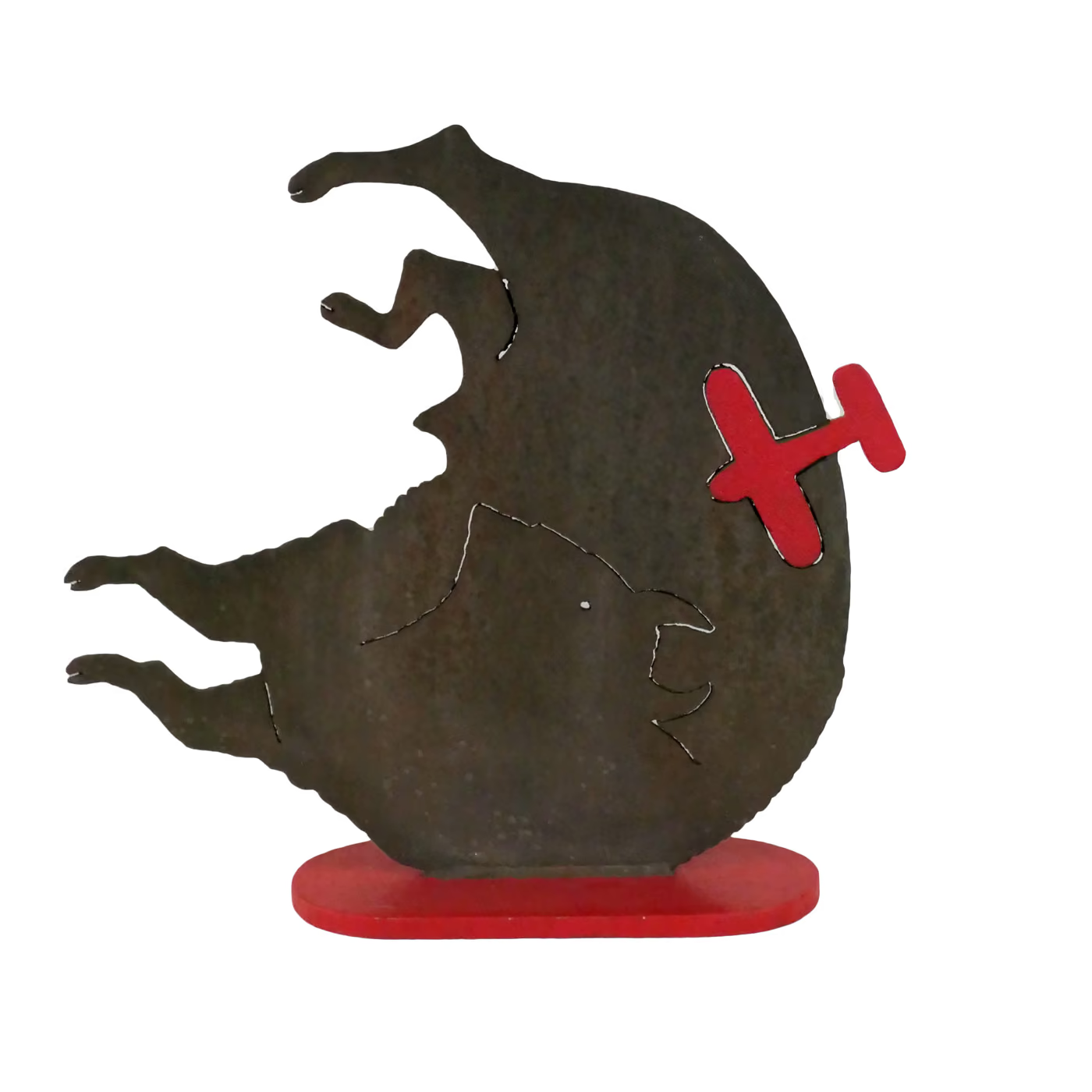
Untitled Metal Sculpture
Bob Haozous is a Chiricahua Apache sculptor born on April 1, 1943, in Los Angeles, California, and enrolled in the Fort Sill Apache Tribe of Oklahoma. He is the son of Allan Houser (born Allan Capron Haozous, 1914–1994), the leading Apache modernist sculptor of the twentieth century and, in 1992, the first American Indian to receive the National Medal of Arts, and Anna Marie Gallegos, a Navajo-Mestiza textile artist. Haozous's use of the family's original Apache name, restored after it had been anglicized to "Houser" during his father's childhood at an Oklahoma Indian boarding school, has been part of his artistic and political identity from the start of his career.
Growing up in a working sculptor's household gave Haozous early exposure to questions of material, scale, and form, though his own path to the studio came after a period of service in the U.S. Navy during the Vietnam War, aboard the USS Frank Knox. He went on to study at Utah State University before earning his BFA in sculpture from the California College of Arts and Crafts in 1971.
Working primarily in steel, stone, wood, and aluminum, Haozous is known for monumental sculpture that pairs strong, clean modernist form with pointed political and environmental commentary, often delivered with humor. His subjects range across Apache history, U.S. policy toward Indigenous peoples, institutional racism, and the environment. He exhibited annually at the Santa Fe Indian Market from 1971 to 1991, and in 1983 was honored in a joint sculpture retrospective with his father at the Heard Museum, where he also received the Gold Medal in wood and stone at the museum's Sculpture Exhibition. He represented Native American art at the Venice Biennale in both 1999 and 2001, and his work has been featured in solo and group exhibitions including Old Man Looking Backward: Bob Haozous at the Wheelwright Museum of the American Indian (2018–19) and Relations: Indigenous Dialogue at the IAIA Museum of Contemporary Native Arts (2006).
Haozous's public commissions include monumental works in Albuquerque, Philadelphia, San Diego, Seattle (including the Seattle Seahawks Stadium), and Tulsa. His work is held in the collections of the British Museum, the National Museum of the American Indian, the Heard Museum, the Haffenreffer Museum of Anthropology at Brown University, and the Wheelwright Museum, among many others. Haozous lives and works in Santa Fe, New Mexico.