The Collection

Ayana V. Jackson
Black Rice
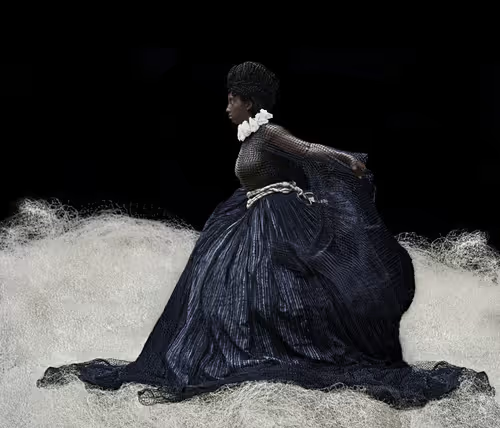
Ayana V. Jackson draws on archival practices to examine how the colonial gaze has shaped the history of photography. Through her work, she deconstructs 19th- and early 20th-century portraiture, questioning the medium’s claim to authenticity and its role in reinforcing social hierarchies and identity.
Her practice centers on the ethical dynamics between photographer, subject, and viewer, while engaging themes of race, gender, and reproduction. Jackson revisits and reimagines colonial-era images, using them to challenge myths of the Black diaspora and reclaim the Black body. By often placing herself within these reconstructed scenes, she both reshapes historical narratives and confronts photography’s enduring influence on how bodies are seen and understood.