Artists
Dalton Paula
Brasília, Brazil, b. 1982
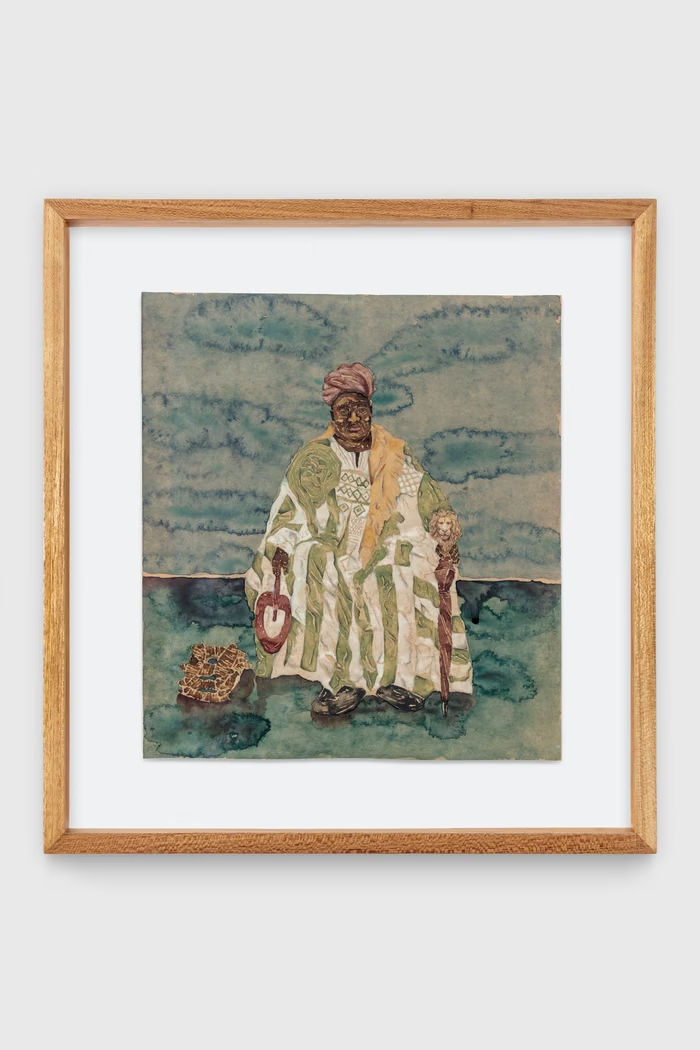
Dalton Paula is a painter, installation artist, and educator whose practice reclaims Afro-Brazilian histories and traditions erased or silenced by colonialism and slavery. Known for portraits that merge contemporary sitters with historical styles, Paula adapts the visual language of retratos pintados—hand-painted photographs from rural Brazil—to honor overlooked figures and elevate them with the reverence of saints, heroes, and deities. His works employ collage, paint, film, and photography, often incorporating gold leaf and ceremonial motifs to restore dignity and visibility to Black subjects excised from official narratives.
Beyond portraiture, Paula has produced installations in ceramics and textiles that reflect on the residues of forced labor in Brazil’s tobacco and cotton industries, linking local histories to broader global contexts. His practice extends to social engagement through Sertão Negro, an art school, residency, and community center he founded in Goiás, modeled after quilombos—historical sites of refuge for African descendants in Brazil.
Paula holds a degree in Visual Arts from the Federal University of Goiás. His recent solo exhibitions include the Museu de Arte de São Paulo (MASP) and Pinacoteca de São Paulo (2022–23), as well as Alexander and Bonin, New York (2020). He has participated in major international exhibitions, including the 60th Venice Biennale (2024), Afro-Atlantic Histories (2018–24, São Paulo; MFA Houston; NGA Washington, D.C.; LACMA; Dallas Museum of Art), the New Museum Triennial, New York (2018), and the 32nd Bienal de São Paulo (2016).
His work is represented in the collections of the Museum of Modern Art (New York), Art Institute of Chicago, ICA Miami, and MASP, among others. Paula has received numerous awards, including the Chanel Next Prize (2024) and the Marcantonio Vilaça Award (2019).